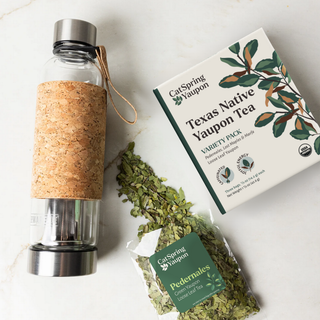
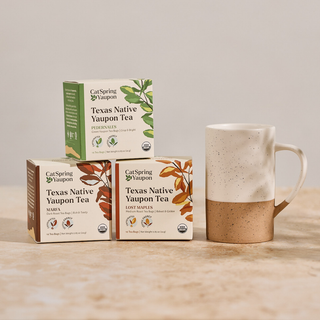


The Remedy Was Already Here
What if the most powerful wellness remedy wasn’t imported—but native to the land, quietly thriving where others couldn’t?
In the Advancing Eco Agriculture Podcast, CatSpring Yaupon co-founder Abianne Falla tells the remarkable story of yaupon holly—a native plant once dismissed as a pest, now returned to its rightful place gaining recognition for what it truly is: a plant of purpose.

Yaupon Tea: Native, Natural, and Nourishing
Long used by Indigenous communities across the Gulf Coast, yaupon holly shrubs thrive along the southeastern United States. Though often classified as invasive, Abianne prefers a different term: pervasive—because yaupon shows up wherever it can survive. During the record-breaking drought of 2011, everything died... except yaupon.
That endurance sparked curiosity. And over the years, Abianne and her team at CatSpring Yaupon discovered what science now supports:
- Yaupon is rich in antioxidants like polyphenols
- It contains smooth, steady caffeine—without the crash of coffee
- It's naturally anti-inflammatory, thanks to rutin and chlorogenic acid
- It’s a non-astringent, herbal tea—meaning no bitterness, even when steeped long
A Stewardship Model, Not Just a Business
What makes CatSpring Yaupon unique isn’t just what’s in the cup—it’s how the company approaches the land.
As Abianne shares, current government conservation practices encourage either bulldozing yaupon or using pesticides like rcemedy and diesel. Instead, CatSpring is pioneering a third path: regenerative harvesting and rewilding.

Through a USDA-supported pilot, CatSpring is testing multi-step ecological interventions—thinning yaupon while reseeding native grasses with 30–50 ft root systems that naturally check yaupon overgrowth. This strategy supports biodiversity, reduces the need for chemical inputs, and increases soil carbon—restoring instead of removing.
The Entrepreneurial Reality: A Brand and a Category
Bringing yaupon back into the public eye meant building more than just a tea brand—it meant creating a new product category in an industry dominated by imported beverages.

Yaupon has a complex social history—a drink of Indigenous ceremony, enslaved communities, and marginalized groups. Its scientific name (Ilex vomitoria) was a calculated insult, likely coined by a botanist employed by the East India Tea Company.
At CatSpring, the goal isn’t just to sell yaupon. It’s to restore respect and value to a native plant once deemed unworthy.
Sourcing as the Future of Innovation
Yaupon is drawing attention not just for its wellness benefits, but for its low-impact, drought-resistant cultivation:
- Zero irrigation
- No chemical inputs
- Wild-harvested from native ecosystems
- 1 cup of water = 1 cup of yaupon, compared to 38 gallons for a cup of coffee
In a time of climate change, water scarcity, and supply chain uncertainty, yaupon offers a local, regenerative solution to global beverage challenges.
“Yaupon may never replace coffee entirely—but it belongs in the conversation.”
Collaborative by Nature, Not Competition
Rather than competing with other yaupon brands, CatSpring has taken a collaborative approach—supplying yaupon to:
- Kombucha brewers
- Tea companies
- Energy drink developers
- Wellness and skincare brands

The Bottom Line: A Remedy That Restores
Yaupon isn’t just a tea. It’s a story of stewardship, of reclaiming value from what was discarded, of healing land and people at the same time. It’s a call to listen—to your land, your community, and your own curiosity.
If you're looking for a natural herbal remedy that supports your well-being and your values, yaupon might just be the answer growing outside your window.


