

Teas People Turn to During Period Cramps
Menstrual cramps are a familiar reality for many people. From soreness in the lower abdomen to back tension, fatigue, and bloating, the physical side of a cycle can be disruptive—especially when you’re expected to keep moving as usual.
While tea isn’t a treatment, many people find that warm, thoughtfully chosen teas offer comfort and grounding during their cycle. Not as a fix, but as part of a gentler routine that supports rest, hydration, and warmth.
Here are seven teas commonly enjoyed during periods, starting with one that’s uniquely smooth and steady.
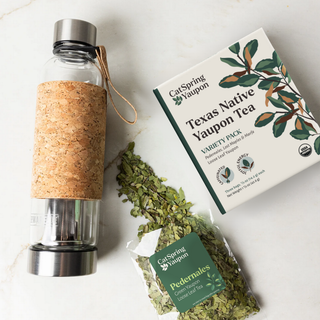
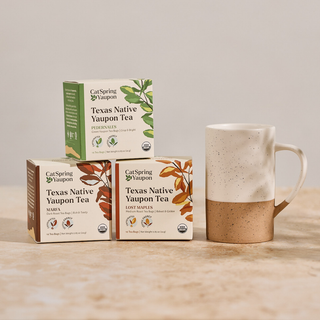
1. Yaupon Tea
Smooth energy without intensity

Yaupon is America’s only native caffeinated plant and has been brewed for centuries. Unlike many traditional teas, it contains no tannins, making it naturally smooth and easy to sip.
Some people appreciate yaupon during their period for its gentle lift—especially when cramps are paired with fatigue or low energy—without the sharp spikes associated with coffee.
Why people reach for it:
2. Ginger Tea
Warming and familiar

Ginger tea has long been enjoyed for its warming nature and bold, grounding flavor. Many people turn to it during their cycle when cramps come with bloating or digestive discomfort.
It’s often brewed simply and enjoyed slowly, sometimes with a bit of honey.
Why people enjoy it:
-
Naturally warming
-
Comforting, familiar taste
-
Commonly used during menstrual discomfort
3. Chamomile Tea
Calm and evening-friendly

Chamomile tea is widely known for its gentle, floral flavor and calming presence. During a menstrual cycle, it’s often chosen in the evenings when cramps, tension, or disrupted sleep are present.
Because it’s caffeine-free, it fits easily into nighttime routines.
Why people choose it:
-
Light, soothing flavor
-
Associated with relaxation
-
Gentle enough for rest and wind-down
4. Peppermint Tea
Cooling and refreshing

Peppermint tea offers a clean, cooling sensation that some people find helpful when cramps are paired with bloating or digestive heaviness.
Its crisp flavor can feel refreshing, though those sensitive to reflux may prefer other options.
Why people reach for it:
-
Fresh, cooling taste
-
Naturally caffeine-free
-
Often enjoyed after meals
5. Cinnamon Tea
Warm and comforting

Cinnamon tea is valued for its warming, cozy flavor. Many people enjoy it during their cycle as part of a comforting routine, especially when paired with rest and warmth.
Its naturally sweet spice makes it easy to enjoy on its own.
Why people include it:
-
Warm, comforting taste
-
Often associated with circulation and warmth
-
Pairs well with evening routines
6. Green Tea
Light and familiar

Green tea offers a lighter caffeine lift than coffee and is often appreciated for its clean, vegetal flavor. Because it does contain tannins, some people prefer a lighter steep during their period.
Why people choose it:
-
Moderate caffeine support
-
Familiar option for tea drinkers
-
Easy to adjust strength
7. Red Raspberry Leaf Tea
Traditionally associated with menstrual support

Red raspberry leaf tea has a long history of traditional use during menstrual cycles. Its mild, earthy flavor makes it easy to incorporate, and many people enjoy it throughout different phases of their cycle.
Why people include it:
-
Mild, approachable taste
-
Traditionally used in menstrual routines
-
Easy to drink warm
Supporting Comfort Beyond the Cup
Tea is often most helpful when paired with other supportive habits, such as:
-
Using heat on the lower abdomen or back
-
Staying well hydrated
-
Prioritizing rest and gentle movement
-
Eating balanced, nourishing meals
Listening to your body—and adjusting from cycle to cycle—matters most.
The Bottom Line
Period cramps look different for everyone, and so does care. While tea isn’t a remedy, many people find that warm, gentle brews offer comfort, grounding, and a sense of ease during their cycle.
From the smooth steadiness of yaupon to the calming presence of chamomile, these teas can be part of a supportive ritual—one cup at a time.

Medical Disclaimer
This article is for informational purposes only and is not intended as medical advice. Individual experiences with menstrual symptoms vary. If you experience severe, persistent, or worsening pain, heavy bleeding, or other concerning symptoms, please consult a qualified healthcare professional. This content is not intended to diagnose, treat, cure, or prevent any medical condition.


