


The Menopause Tea Ritual Worth Keeping
This transition brings real change. Hot flashes arrive without warning. Night sweats break up a night's sleep, and mood swings catch you off guard. A daily ritual will not undo any of that. What it can do is give you a few steady, grounding minutes in a season that has too few of them.
Herbal remedies have offered that kind of comfort for centuries. That is part of why a menopause tea ritual keeps showing up in this conversation.
What follows is a plain-spoken look at seven picks worth keeping in the cupboard during this stage of life. They are chosen for how they support a calmer daily rhythm, not for any promise to fix what your body is going through.
One of them, yaupon tea, is a wildly smooth, naturally sweet native plant most people have never tried. It has quietly become a favorite anchor for exactly this kind of ritual.
None of these picks will erase menopausal symptoms or turn back the clock on hormonal changes. What they can do is give you a handful of quiet minutes, several times a day, that are entirely yours.
That is a smaller promise than most menopause tea lists make. It is one we can actually keep.
This Season Calls for Ritual
This stage of life is real, and it is hard. Pretending otherwise does nobody any favors. Hot flashes, disrupted sleep, and mood swings that seem to come from nowhere are the honest, lived experience of these years. They are not a problem to minimize or a symptom list to power through in silence.
Search around for menopause tea online, and you will find plenty of sites promising to alleviate these symptoms. Some ease hot flashes with herbs like black cohosh and red clover, sometimes in the same breath as hormone therapy. That is not the promise here. No infusion is going to balance your hormones or make hot flashes disappear. Any brand that tells you otherwise is selling you something it cannot deliver.
What a daily ritual can offer is smaller and, we would argue, more honest. It is a few minutes that belong to you, a warm cup to hold, something steady amid hormonal changes you did not ask for and cannot control.
A ritual does not fix the season. It gives you something to hold onto while you move through it, one ordinary cup at a time. It does not ask you to overhaul your whole healthy lifestyle overnight or chase down every natural options list on the internet.
Seven Picks Worth Keeping Around
None of these picks is a cure, and none of them is meant to be. Each one is a small, steady comfort you can reach for depending on what your evening or morning needs. Many women find that having a few options on hand, rather than just one, makes the ritual easier to keep.
Many of these plants carry real health benefits beyond just taste, which is part of why they have stuck around this long. Some of the potential benefits are more folklore than settled proof, but that has never stopped them from earning a permanent spot in the cupboard.
1. Valerian Root.
Valerian has a long history as a bedtime infusion. Its earthy, slightly bitter cup has settled many restless nights over the centuries. It is traditionally used to support relaxation and restful sleep, which matters when night sweats and racing thoughts keep interrupting rest. If sleep issues are part of what you're dealing with, an evening cup can be a small, steady way to wind down.
It is naturally caffeine-free, so it will not add to sleep troubles the way a late cup of coffee could. Side effects are usually mild, most often drowsiness or a headache, so it is best saved for an evening cup rather than a morning one.
2. Licorice Tea
Sweet, warm, and a little bit like an old-fashioned candy in a cup, licorice root has traditionally been used in herbal remedies for digestive comfort. It also works as a calming ritual at the end of a long day, the kind of small habit worth reaching for after a stretch of bad days. It is not a hormone treatment, and it will not balance anything on its own.
If you take blood pressure medication or deal with high blood pressure, talk to your doctor before adding this pick to your routine. It can interact with certain prescription medications and blood thinners, and, in some people, cause liver problems with regular heavy use.
3. Ginger Tea
Fresh ginger has a bright, warming bite that many people reach for when their stomach feels unsettled. A study of pregnant women with morning sickness found that daily ginger eased their pregnancy nausea.
A single cup contains around 250 milligrams of ginger, alongside a small amount of vitamin C from the fresh root itself, and its warmth is said to carry mild anti-inflammatory properties too. That research is about nausea and digestive issues generally, not menopausal symptoms specifically.
Still, it is a real, well-documented reason this pick has earned a permanent spot in a lot of cupboards. It pairs well with a light snack if an empty stomach is part of what is bothering you.
4. Green Tea
This infusion's grassy, slightly vegetal cup comes with antioxidant properties and antioxidant compounds studied for their role in overall health and mood changes. It is naturally caffeinated, so it works better as a morning or early afternoon choice than an evening one, especially if you are sensitive to caffeine on top of already-disrupted sleep. Some people also find its gentle lift easier on the stomach than a stronger cup of coffee.
5. Ginseng Tea
This root has a rounder, almost sweet earthiness. It has been used traditionally to support steady energy and overall health, often framed as part of a routine built around a sense of hormonal balance rather than a fix for any single symptom.
It is a gentler complement to a calmer daily ritual than a treatment aimed at any one symptom, which is exactly why it belongs on this list rather than a pharmacy shelf. A cup in the late morning is a nice, low-key way to carry that steadiness into the rest of the day.
6. Peppermint Tea
Peppermint's cool, bright flavor is one of the most immediately soothing things you can sip. It is traditionally used to support digestion and stomach pain.
The same menthol that gives it that cooling sensation has calming properties well beyond this stage of life. A cup after dinner is a small, simple way to close out the day, and its caffeine-free profile makes it forgiving no matter how late you drink it.
And then there is yaupon, the only plant on this list that is genuinely native to North America. It gets a full introduction below, because it has earned one.
7. Yaupon Tea, the Daily Anchor and our Top Pick
Yaupon is the only plant native to North America that naturally contains caffeine, according to National Park Service guidance.
It carries roughly 25 milligrams of caffeine per serving, compared with about 90 milligrams in a typical cup of coffee, per FDA caffeine comparison data. That is meaningfully less caffeine. It is exactly why yaupon fits a calmer daily rhythm without the spike and crash that heavier caffeine can bring, something worth knowing when sleep is already unpredictable.
It also carries a real load of polyphenol antioxidants. That is the plain-language reason yaupon fits so naturally into a ritual built for steadiness during hormonal shifts, rather than any single symptom claim, with little risk beyond the ordinary caution any herbal supplement deserves.
Yaupon is not on this list because it treats anything. It is here because it is a steady, native, no-crash cup that a lot of people reach for as their anchor. It is wildly smooth and naturally sweet, with none of the bitterness that keeps some people from finishing a cup.
It has a story behind it, too. Yaupon grew wild across the American South for centuries before it was mostly forgotten, not because it stopped growing but because the people who knew it faded from the conversation.
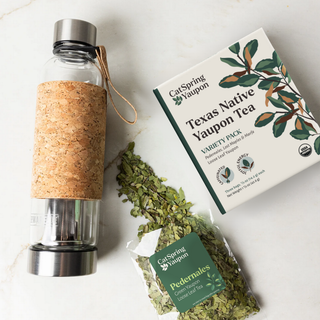
CatSpring's own yaupon collection page is one small part of bringing it back into everyday cupboards. It is grown wild in Texas's sandy loam soil rather than shipped in from somewhere else. If you want to go deeper on what makes it different from what most people already sip, the real benefits of yaupon is worth a read.
For a lot of people building this kind of ritual, yaupon becomes the cup that shows up every single day. It is the constant underneath the seven picks above rather than one more option among them. It is a plant with a real place in this country's history, and steeping a cup of it is a small, steady way to be part of that story as it continues.
Building the Tea Ritual
The ritual is not really about any single pick. It is about the five quiet minutes you take to make one and actually sit with it.
A few simple ways to build that into a day:
-
Morning: Reach for something naturally caffeinated, like yaupon or a green pour, if you want steady energy without the jitters that come with a stronger cup of coffee.
-
Afternoon: A ginger or peppermint pick works well when digestive discomfort or an unsettled stomach shows up after lunch.
-
Evening: Save valerian or licorice for the end of the day, when you want something warm and quiet rather than another caffeine jolt.
None of these picks requires precise timing or a fussy setup. Steep it in hot water, wait a few minutes, and drink it while it is warm.
Yaupon in particular is nearly impossible to get wrong. It carries little to no bitterness even when a cup steeps far longer than it should. That matters on the mornings when you get pulled away mid-pour and forget it is even there.
If you want an easy way to try a few roasts before settling into a favorite, CatSpring's loose leaf starter pack is built for exactly that kind of exploring. It keeps you hydrated one warm cup at a time as you figure out what actually fits your day.
Making It a Daily Practice
Each cup is a small act of care for your body, and that is worth something on its own, even on the days when the season feels like too much.
Staying hydrated matters here too, alongside the ritual itself.
One honest note: if hot flashes, mood swings, or sleep troubles are severe or persistent, that is worth a real conversation with your doctor. It is not something to manage with a ritual alone.
Your doctor might talk with you about hormone replacement therapy or other prescription medications. A daily ritual is not a substitute for that conversation. It is a small, steady comfort alongside it, not instead of it.
That is not meant as a hedge. It is meant as care. A ritual works best as one part of paying attention to yourself during a season that asks a lot of you, not as the only thing you are leaning on.
Many postmenopausal women say the habit outlasts the years that made them start it. It simply becomes part of good women's health practice long after the more disruptive symptoms have eased.
A wellness routine that asks nothing of you except to slow down for a few minutes is worth keeping, season after season, long after this particular one has passed, and it costs your overall well-being nothing to try.
A Ritual Worth Keeping
This transition does not come with a manual, and no single pick, herb, or supplement is going to hand you one either. What these seven picks offer instead, alongside a menopause tea ritual built for the long run, is something smaller and more sustainable.
It is a daily habit you can lean on, built from real ingredients with honest, traditional use, chosen because they fit a calmer rhythm rather than because they promise to fix anything.
A caffeine-free herbal blend at night and a brighter cup in the morning cover most of what other herbs in this space are asked to do, without any of them needing to be a cure.
These statements have not been evaluated by the Food and Drug Administration. These products are not intended to diagnose, treat, cure, or prevent any disease. If you are pregnant, nursing, taking medication, or managing a health condition, talk to your doctor before adding any new herbal blend to your routine.


