


A headache has a way of narrowing your whole world down to one dull, insistent point. Before you reach for the medicine cabinet, a warm cup of tea can be a grounding first step. Not a cure, not a treatment. Just a quiet routine that brings some comfort, keeps you hydrated, and gives your body a moment to settle.
These seven herbal teas are worth keeping on hand for those off days. Each one brings something a little different. If you are new to exploring herbal teas for everyday comfort, the variety here gives you good ground to start from.

1. Yaupon Tea
Yaupon is the only naturally caffeinated plant native to North America. It has unique properties that traditional herbal teas lack. One of these is rutin, which is also found in apples and lemons. It is an anti-inflammatory, and yaupon has 4 times the amount of rutin found in its popular cousin plant, guayusa.
Yaupon also delivers a pretty unique energy. With smooth caffeine (about 25 mg per serving), the boost is augmented by theobromine and theacrine to give a steady mental lift. Some folks say it is caffeine without the anxiety.
Benefits:
- Improve cerebral blood flow thanks to vasodilation of blood vessels from polyphenols and flavonoids. Decreased chronic inflammation via chlorogenic acid (CGA) that has anti-inflammatory properties.
- A gentle boost of caffeine that will energize you without the crash, and can help ease caffeine withdrawal headaches without the jitteriness.
Side Effects:
- May cause sleeplessness due to caffeine if large amounts of yaupon are consumed all at once.
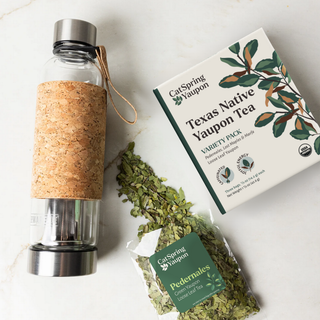
Try our CatSpring Yaupon tea to support comfort on those off days. It is organic, non-GMO, kosher, sustainably grown, and naturally caffeinated.

2. Ginger Tea
Ginger tea has been used for thousands of years as a remedy for nausea and digestive problems in regions such as Asia and India. It is a popular option for those looking for herbal teas for headaches. Aim to drink two to four cups during a headache to support comfort throughout the day.
Benefits:
- Makes you feel better faster than ginger ale because it contains higher concentrations of ginger and its natural compounds.
- May ease inflammation and ease the stress on your tissues and organs including your brain.
- May reduce pain, though additional studies are needed to find out the extent of this effect.
Side Effects:
- Makes heartburn worse because it relaxes the muscle that prevents stomach bile from entering the esophagus.
3. Rooibos Tea
Originating in Africa and now popular worldwide, rooibos is a caffeine-free herbal tea that is a welcome alternative to traditional black tea. It often undergoes oxidation and is also sometimes fermented.
It has an earthy flavor similar to yerba mate, and your brew is less likely to be bitter because rooibos has fewer tannins than other teas. Just like yaupon tea, rooibos contains rutin, which may help block the release of histamines that can trigger headaches and migraine attacks.
Benefits:
- Caffeine-free: a great option for those who experience tension headaches at night.
- Rich in polyphenolic antioxidants including aspalathin and rutin that help protect your healthy cells and organs.
- Naturally low in tannins, making it easy on the stomach and suitable for sipping throughout the day.
Side Effects:
- Consuming too much rooibos has been linked to liver stress, so be sure to talk to your doctor.

4. Chamomile Tea
Chamomile is primarily brewed from one of two daisy-like species of flower and is commonly known for its stress-relieving properties.
It is long believed to have health benefits, though many are still under research. Its relaxing properties make it a good companion for those experiencing migraines or tension headaches.
Add it to your nightly routine to help deal with those lingering headaches.
Benefits:
- Increases calmness due to the powerhouse compound apigenin, which can also relieve nausea, headaches, and fatigue.
- Promotes sleep due to its chemical structure, helping you relax and get that much needed rest.
- A natural relaxant, this tea can help tension headaches in particular.
Side Effects:
- Chamomile does cause drowsiness, so be aware before consuming.
5. Peppermint Tea
Peppermint tea has a signature minty flavor from its easy brewing using mint leaves. This menthol-based flavor can help soothe headache discomfort while also freshening your breath instantly. A refreshing cup with a cooling effect, this is a welcome option for those looking to support headache comfort.
Pro tip: you can also add peppermint oil to any beverage instead of using tea bags.
Benefits:
- May help ease headaches as peppermint is a natural muscle relaxant, while the menthol increases blood flow that creates a cooling sensation.
- Decrease nasal congestion in large part due to the vapors that increase the perception of airflow, easing congestion pain and discomfort that can contribute to migraines.
- Caffeine-free and coming in oil or bag form, peppermint is a versatile option even for relieving headaches at night.
Side Effects:
- Can worsen acid reflux by relaxing the muscles around the stomach sphincter.

6. Turmeric Tea
Turmeric has long been used in India in various dishes and is known for its distinctive yellow color caused by curcumin. Ongoing research is determining the effects of curcumin in turmeric tea, but it may have antioxidant, anti-inflammatory, and antidiabetic properties.
Curcumin has been found to have neuroprotective effects that may help ease the impact of migraine and headache pain. Peppery and ginger-tinged, this herbal tea is a comforting and useful option.
Benefits:
- No caffeine makes this a great bedtime option.
- With its anti-inflammatory properties, turmeric can help relieve inflammation throughout the body.
- Stimulate blood flow which helps to flush out toxins and remove debris from your vessels.
Side Effects:
- When consumed in high doses, turmeric tea can upset some people's stomachs.
7. Lavender Tea
Made by steeping lavender buds in hot water, lavender tea is known for its calming properties. A floral aroma with hints of rosemary and mint, this is a great option for those looking for a caffeine-free herbal tea that smells and tastes delightful while helping ease headaches.
Staying well hydrated with warm water throughout the day can also help reduce how often tension headaches show up.
Benefits:
- With anti-inflammatory properties, this tea can possibly help soothe irritated tissues.
- The smell of lavender has also been shown to have a soothing effect and ease feelings of tension.
- Known to cause drowsiness, lavender can help promote a good night's sleep.
Side Effects:
- Be careful of taking lavender tea with any other sedatives.
Teas Worth Reaching For
When a headache settles in, the right cup of tea can make the moment a little more bearable. Warm water, steady sips, and herbs that have supported people through difficult days for centuries. That is worth something.
Some of these options work through hydration and warmth alone. Others bring their own herbal properties along for the ride. If you want to keep exploring, our guide to The 7 Best Teas for Allergies covers more ground on teas that support comfort through herbs and gentle ingredients.
If you want to start with something that has a genuine story behind it, our hand-roasted yaupon tea is wild-harvested in Texas, naturally caffeinated, and wildly smooth. It is a steady, grounding cup you can come back to every day.
We are stewards of yaupon, and this plant has been a companion to people on this land for a very long time. Let it be yours too.
Medical Disclaimer: This article is for informational purposes only and shouldn't be taken as medical advice. If you have serious health-related issues you should reach out to a medical professional. While we have reviewed the available scientific research, this is not intended to diagnose, treat, cure, or prevent any disease.


