


You know the feeling. A heavy lunch, a stretch of stress, or just a day that got away from you, and suddenly your stomach is the loudest thing in the room. Nothing dramatic. Just that low hum of discomfort that makes you want to sit still for a minute and breathe.
Maybe it shows up as an afternoon that feels heavier than it should, a meal that sits wrong, or the general sense that your gut and your calendar are fighting each other. Whatever the shape of it, the fix rarely feels like more effort. Usually it feels like less.
That's where a good cup of tea earns its place. Not as a fix, but as a pause. A warm mug between your hands, a few quiet minutes, and a small ritual that tells your body it's safe to slow down. The right tea won't solve a stressful week, but it can make the next twenty minutes of it feel a little softer.
Why a Tea Ritual Helps
Digestion isn't only about what you eat. It's tangled up with how rushed you feel, how little water you drank, and whether you actually sat down for the meal in the first place. A slow cup of tea can't undo a bad week, but it can send your digestive tract a clear signal to settle down.
The warmth relaxes you, and the pause gives your gut a moment to catch up. A mindful ritual like this is part of what people mean when they talk about supporting gut health day to day, and the right blend can add to that easy, everyday comfort you're after, gently, without any drama.
Think of it less like medicine and more like a habit you're building on purpose. A few minutes of sitting still, a warm cup, a breath before the next thing on your list. Do that often enough and your stomach starts to notice the difference, even on the days when nothing else about your schedule slows down.
This isn't about chasing a cure. It's about building a small habit that makes an ordinary day feel more grounded, supporting healthy digestion the same unglamorous way good sleep and steady water intake do. This kind of low-key ritual isn't only useful for digestion, either.
The same unhurried approach works for easing seasonal allergy discomfort, steady focus and attention, or gentle morning recovery rituals, whenever your body needs a nudge back toward calm. Below are a handful of teas worth keeping close for digestion specifically.
Teas Worth Keeping in Your Pantry
Good: Peppermint, Cool and Familiar
Peppermint is the classic for a reason. Its bright, minty flavor comes with a cooling feel that's traditionally been used to ease bloating and calm a fussy stomach after a big meal, and an NIH research summary on peppermint notes that peppermint oil has specifically been studied for that same kind of digestive discomfort. It's an easy one to reach for after dinner, and it freshens your breath as a bonus. If you deal with acid reflux, sip this one earlier in the day rather than right before bed.
Better: Ginger, Warm and Grounding
Ginger has centuries of history as the go-to for an unsettled stomach, and an NIH summary traces that reputation back to its traditional use for indigestion and gastrointestinal discomfort. Its warmth and gentle spice have long been used to ease nausea and help food move through your system with less friction. A cup after a rich meal feels like exactly what your body was asking for.
Best: Yaupon, Steady and American-Grown
Most digestion teas focus on relief after the fact. Yaupon works a little differently. It's America's only native caffeine, wild-harvested from Texas holly trees that have supported people in this region for centuries, and it carries a rare trio of caffeine, theobromine, and theacrine that gives you a steady, joyful lift without the jittery spike or crash of coffee.
That steadiness matters for digestion too. A gentler energy curve means less of the stress response that can tighten up your gut in the first place.
-
Fennel, Soft and Aromatic: Fennel seed tea has a gentle licorice-like flavor and a long tradition as a digestive aid, especially after meals that leave you feeling full or gassy. Its aromatic oils are the reason grandmothers have kept a fennel tin in the pantry for generations. It's a calm, easy pour when your stomach wants something soothing rather than stimulating.
-
Marshmallow Root, Silky and Softening: This one surprises people. Marshmallow root doesn't taste like the candy, but it does have a similarly soft, almost silky quality when steeped. The plant naturally contains compounds that have long been used to coat and soothe the digestive lining, which makes it a gentle choice on a day when your stomach feels raw or overworked.
-
Licorice Root, Deep and Comforting: Licorice root tea has been part of digestive traditions across Asia and Europe for thousands of years. Its natural compounds have traditionally been used to support the stomach lining and ease everyday discomfort. It's a rich, slightly sweet cup, best enjoyed on its own rather than stacked with other strong flavors.
-
Black Tea, Familiar and Comforting: If you want something that feels closer to your usual cup, black tea is the easy bridge. It's warm, a little brisk, and familiar in a way that can be its own kind of comfort when your stomach wants routine over novelty. It pairs well after a meal when you want the ritual of tea without changing up your flavor too much.
And because yaupon is naturally low in tannins, it stays smooth and never turns bitter or cloudy, no matter how long you let it steep. There's no clock to watch, no perfect timing to get right. Just pour, wait as long as you like, and drink.
The Yaupon Spotlight
If you haven't tried yaupon yet, digestion is a good reason to start.
It's harvested from wild-growing holly trees across the sandy-loam soil of Texas, a plant that Indigenous communities across the American South have gathered and shared for generations, traded from the Gulf Coast to the Great Plains long before it had a shelf in a grocery store.
CatSpring's role is simple: steward that tradition, harvest it by hand, and roast it in small batches without stripping away what makes it work.
The steady energy is the part people notice first. That trio of caffeine, theobromine, and theacrine gives you a lift that builds gently and holds, instead of spiking and crashing the way coffee can. Less spike means less of the tense, wound-up feeling that often shows up as stomach trouble in the first place.
And because yaupon is naturally low in tannins, it never turns bitter no matter how long it brews, so a distracted afternoon steep still tastes good instead of turning sharp and astringent.
That forgiveness is part of the appeal for anyone easing into a new tea habit. There's no timer to set, no window to miss. You pour it, walk away, and come back to a cup that still tastes like it was made on purpose.
There's also the bigger picture. Every wild harvest is paired with active grassland restoration, so the tea in your cup is tied to healthier soil back where it grew. It's a small, steady choice that supports your gut and the land at the same time, one cup at a time.
How to Brew It Right
Yaupon is about as forgiving as tea gets. Steep it hot for four to six minutes, or let it go longer if you get pulled away; it won't turn bitter or cloudy either way. Prefer it cold? Let it steep, then pour over ice for a bright, refreshing glass any time of day.
For the other teas on this list, a shorter steep of five to seven minutes usually hits the sweet spot. Anything longer can bring out bitterness in peppermint or licorice, so if you're stepping away from the kettle, yaupon is the one to reach for.
The brewing itself can be part of the ritual, not just a step before it. Fill the kettle, choose your mug, let the steam rise while you wait. That short pause before the first sip is doing some of the work too.
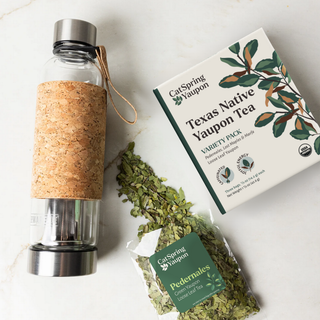
Start with our Pedernales green roast for something crisp and bright, or the Lost Maples medium roast if you want something warmer and rounder in the cup. Either way, a teabag starter pack is the easiest way to find out which one fits your daily ritual.
A Small Ritual, Not a Fix
None of these teas are a cure for a rough digestive day, and that's not what this is about. It's about building a small pocket of calm into your afternoon, one cup at a time, and choosing an ingredient that's honest about where it comes from and what it does.
If your digestion tea search led you here, take that as a nudge to slow down for five minutes today. Put the kettle on. See which one you reach for. And if you're still figuring out which tea fits your daily rhythm, that's part of the point. This kind of ritual isn't meant to be perfect on day one.
We are stewards of yaupon. Yaupon is a catalyst for restoration, one cup, one settled stomach, at a time.
Medical Disclaimer: This article is for informative purposes only and shouldn’t be taken as medical advice. If you have serious health-related issues you should reach out to a medical professional. While we have studied the scientific research available, this is not intended to diagnose, treat, cure, or prevent any disease.


